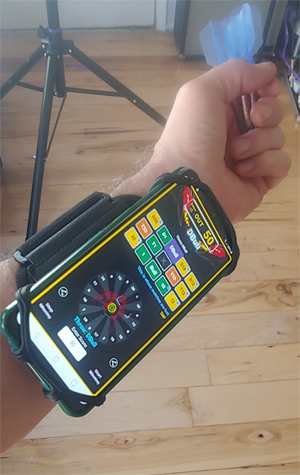
125 Checkout in Darts — T20, 15, DBull
125 is one of the high-value finishes in 501 — a score where the first dart needs to carry both precision and commitment from the moment it leaves the hand. The route runs T20 → 15 → DBull, closing on DBull — a tighter double that raises the execution requirement on the final dart. From this score, the margin for error on the opening dart is narrow: a clean T20 keeps the route fully intact, while a slight miss forces an immediate decision about the best available continuation.
The preferred miss direction on T20 from 125 is toward 5. Landing there leaves 120 — a position that still carries a realistic path to the close. The 1 side leaves 124 and a harder problem. Players who pay attention to miss geometry on their primary scoring targets consistently produce better outcomes from imperfect darts, which is where most of the marginal gains in competitive 501 are actually found — not in perfect throws, which are the same for everyone, but in where the imperfect ones land.
Players who are reliable at finishing 125 in competition have usually identified and eliminated one specific failure pattern from their game: the tendency to respond to what just happened rather than commit to what comes next. If the first dart misses, the instinct is to adjust — to be more careful, to aim more precisely, to compensate. That instinct is the source of most dropped legs on 125. The route provides the continuation from any reasonable first-dart outcome. Trusting the route rather than overriding it mid-visit is the discipline that converts practice form into match results.
A consistent pre-shot routine is a pressure management tool as much as a technical habit. Build one in practice so it is available automatically in competition. Handling pressure is one of the core skills in competitive darts finishing, and deliberate practice creates a measurable and lasting advantage here. Control on the first dart at 125 is more valuable than any other single factor. The rest of the visit stays structured when the opening dart lands clean. Pressure reveals the quality of the routine. Players with a consistent pre-throw process handle 125 in competition almost exactly as they do in practice. Most pressure misses on 125 are not aim problems. The breakdown is in the grip and release tempo — both of which are fully within the player's control.
If the opponent is not threatening, consider whether a double-based alternative offers more control before committing to the bull. The bull is strongest when urgency is real.
Route Comparison & Target Selection
Primary: T20 → 15 → DBull
treble 20 (60), single 15, closing on bull (50) — direct bull finish
Alternate: Bull → T20 → D20
bull (50), treble 20 (60), closing on double 20 — high-percentage close — no triple required on opener
The primary (T20 → 15 → DBull) is the standard route — T20 scores hard and DBull closes the leg with the route's full structure intact. The alternate (Bull → T20 → D20) replaces T20 with Bull, a single that does not require a 6mm triple bed on the opening dart. From 125, that trade makes sense when holding a significant lead: the leg is already likely to be won, and the wider first-dart target reduces the chance of a breakdown on the opener. Use the primary when scoring matters; use the alternate when the lead justifies reducing risk.
The 25 is the risk zone on this finish. The bull must be committed to fully or not at all.
Miss Geometry, Route Structure & When to Use the Alternate
From 125, the first dart targets treble 20 — but the neighbour geometry here matters as much as the target itself. The 5 sits to the left and the 1 to the right, making this the most unforgiving triple on the board for errant darts. A miss into 5 from 125 produces 120 remaining; into 1 it produces 124. The preferred drift direction — toward 5 — leaves the more workable 120, but even that requires a recovery route that starts the close later than hitting the treble would. When grouping drifts below the bed consistently, treble 19 corrects both the mechanical and geometric problem simultaneously: its 3 and 7 neighbours are higher-value, the miss cost is lower, and the route into a close from the resulting leaves is more often clean. For the structure from here, three darts are the minimum from 125 because the score does not break into a clean two-dart finish from any standard opening. The route — T20 → 15 → DBull — assigns each dart a distinct role: T20 opens the scoring phase, 15 bridges into the finish window, and DBull closes the leg. The most common breakdown on three-dart routes is not on the closing double but on the second dart — players who land the first setup dart cleanly sometimes release pressure too early, rush 15, and arrive at DBull from a worse position than the route intended. Treating each dart in the sequence as its own committed decision, rather than as a step toward the eventual close, is the execution standard that three-dart routes require. As for the alternate route, the alternate (Bull → T20 → D20) exists specifically for match situations where the primary route's triple opening carries more risk than the position warrants. Starting on Bull rather than T20 widens the first-dart window, removes the triple requirement, and still delivers the close at D20 through a controlled, recoverable path. That trade — some scoring pace for greater first-dart reliability — is the correct one when holding a significant lead. When the match is tight or the leg is close, the primary's efficiency and the scoring pressure it applies are the right call.
When and Why to Use This Route
This route is correct when the opponent can win on their next visit and a direct finish is needed. The bull's value is its speed — it ends the leg without building toward a standard double. That speed is the reason to use it. When urgency is absent, the standard route to a reliable double is the better structure.
The strength of this route is its directness. Rather than working through a scoring setup and then building toward a standard double, the bull provides a single target that ends the leg immediately. The absence of intermediate darts means there is nothing between the player and the finish — hit the bull and the leg is over. That simplicity is the route's defining advantage, and it is why the bull route is correct when speed matters more than recovery options.
Why Players Miss This Finish
Missing the bull on 125 comes from one specific mechanical failure: the arm decelerates in the final phase of the throw. Players who miss the bull wide are almost always releasing the dart too late, with too little forward momentum, causing it to drift right or left of the centre. Players who miss it low are slowing the arm too much through the release, causing the dart to drop below the 50 ring. Both errors come from the same source — an attempt to be more precise that changes the very mechanics that were producing accurate throws in practice.
The fix for bull misses on 125 in competition is not a mechanical change — it is a mental one. Stop treating the bull as a special shot. It is a target at the same distance as every other target. The same throw that works on treble 20 in practice works on the bull. Carrying that belief to the oche — rather than adopting a more deliberate, more careful approach for a finish that is perceived as harder — is what makes bull finishes consistent in competitive play.
Practice
Build the 125 checkout through the middle dart. T20 and DBull receive most of the practice attention in most players' routines — T20 because it opens the visit and DBull because it closes it. But on 125, 15 is usually where the leg is won or lost. A clean T20 that is followed by a slightly rushed 15 leaves DBull from a weaker position than the route intended. Give 15 deliberate practice in isolation — it is the least-practised dart in most three-dart routes and the one that determines whether the close is routine or difficult.
Add consequence to the end of every 125 practice block. After completing the route a set number of times cleanly, throw T20 deliberately off-line and practise continuing from 120 and 124 without resetting. This forces the continuation habit — the automatic response to a miss on the opener that keeps the visit running rather than stalling. Players who have practised their recovery positions finish more legs from imperfect visits than those who only ever practise the clean route.