Darts Equipment Guide
Updated
Equipment does not make the player — but the wrong setup introduces variables that undermine what practice builds. Five categories. What matters in each and why. You'll find Amazon links to hand picked products as a good starting point. This page contains affiliate links. I may receive a small commission if you purchase through these links at no extra cost to you.
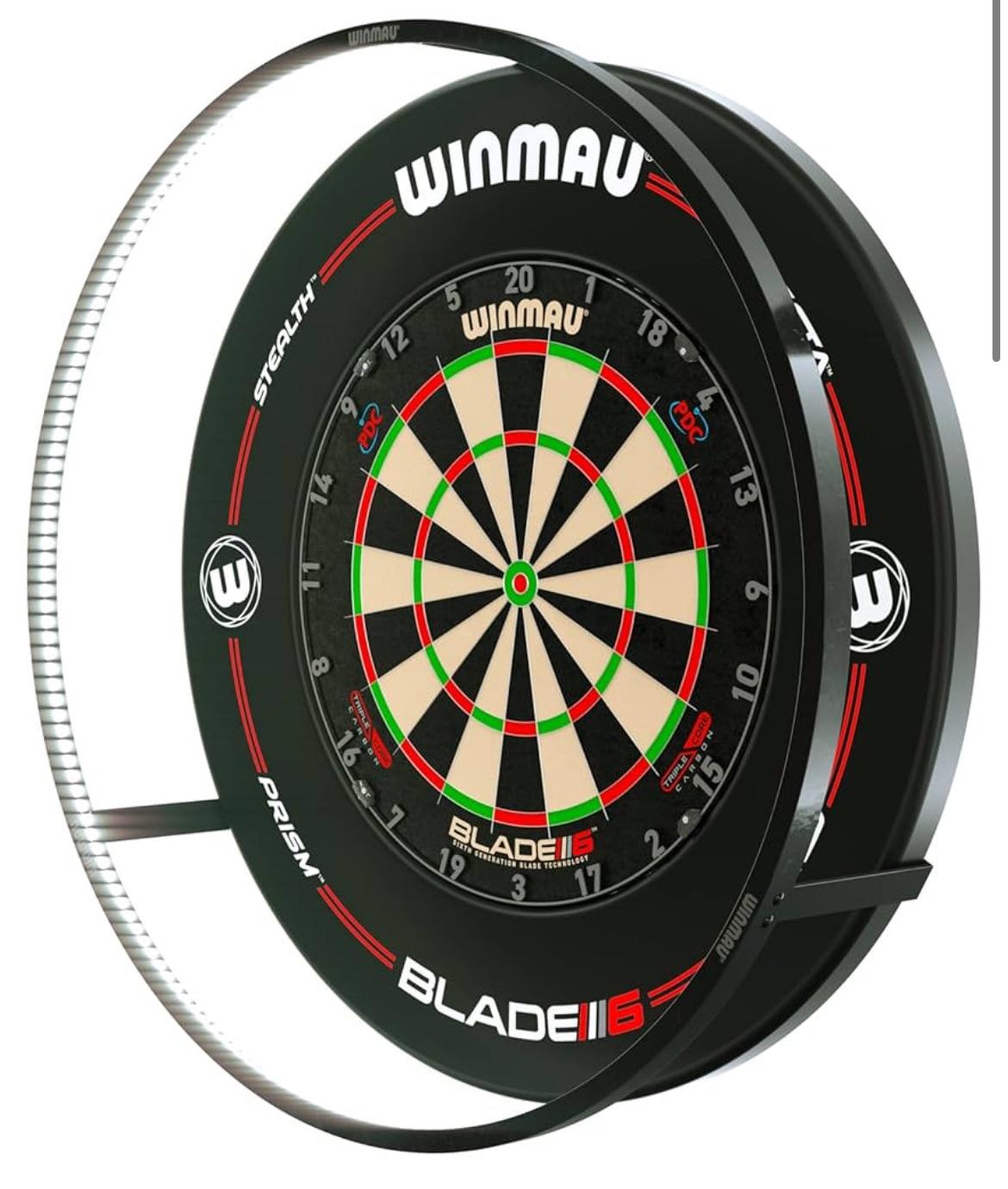
360° Dartboard Lighting
A single overhead light or side lamp casts shadows across segments and distorts how the target looks at the point of aim. You train on a shadowed board, then compete under even venue lighting — and the board looks different. That visual discrepancy is a real accuracy cost that most players never identify because it is invisible during practice.
A 360° ring light mounted around the face of the board eliminates shadows from every angle simultaneously. Every segment is lit evenly. The board looks the same at 8am and 11pm, from the centre of your stance or the edge — exactly as it will look at a competition venue.
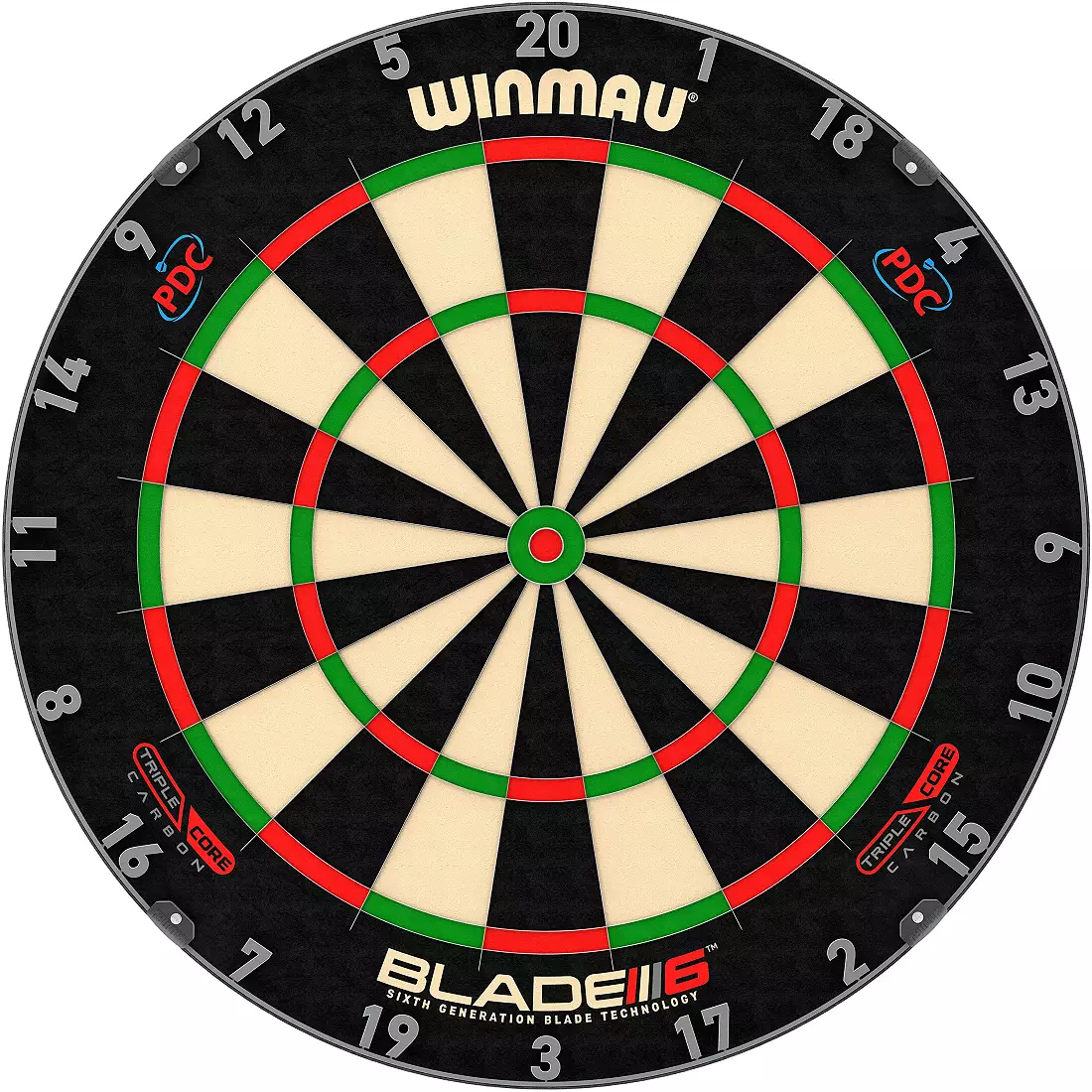
Bristle Dartboard
Bristle (sisal fibre) is the only board material that replicates competition conditions. Sisal self-heals when darts are removed — the fibres compress around the dart and spring back, which means a well-maintained bristle board lasts for years of daily practice. Paper-wound and cork boards do not heal, deteriorate within months, and produce a different dart entry feel that does not transfer to match play.
Regulation boards are 45cm (18 inches) in diameter with a bullseye at exactly 173cm (5ft 8in) from the floor and a throwing distance of 237cm (7ft 9¼in) for steel tip. Practising on anything smaller or at a different distance trains incorrect muscle memory that has to be unlearned.
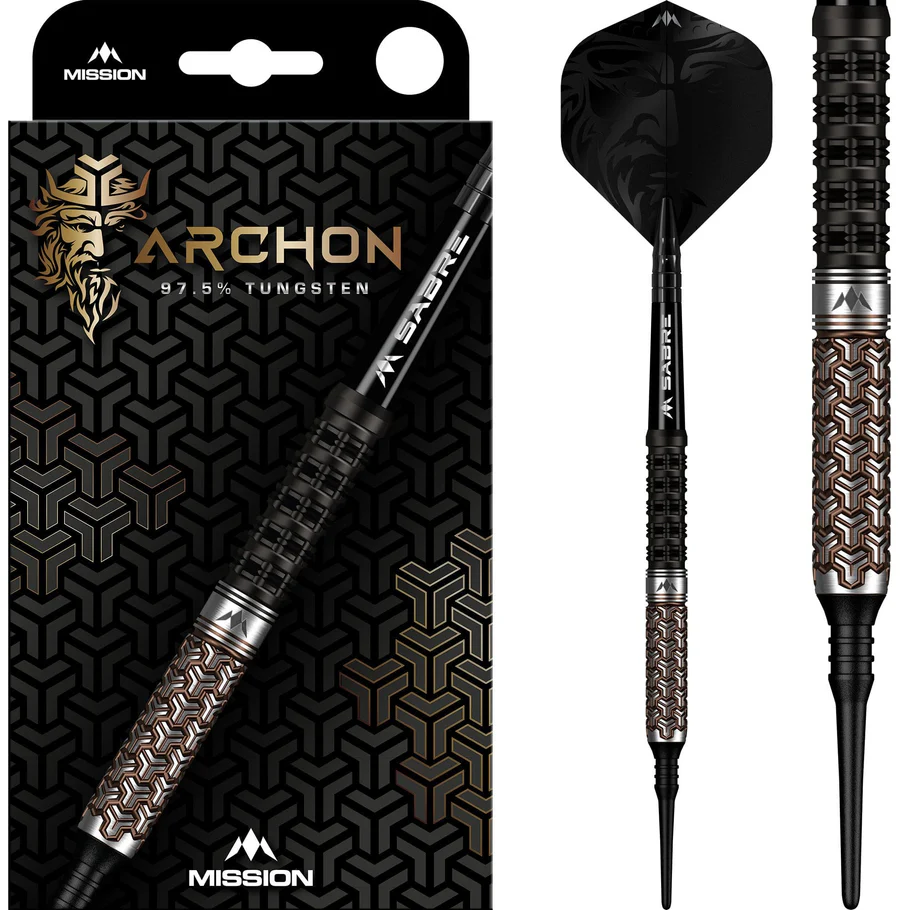
Tungsten Darts
Tungsten is the standard barrel material for competitive darts because its density allows thin barrels at high weights. Thinner barrels mean tighter grouping potential — three darts can sit in a treble bed that would be impossible with brass or nickel-silver barrels of the same weight. Higher tungsten percentage means thinner barrel for the same gram weight.
For weight: most competitive players settle between 21g and 26g. Heavier darts (24–26g) fly straighter with less required throw force. Lighter darts suit faster throws. The correct weight produces identical release timing across all three darts in a visit — not just the first.
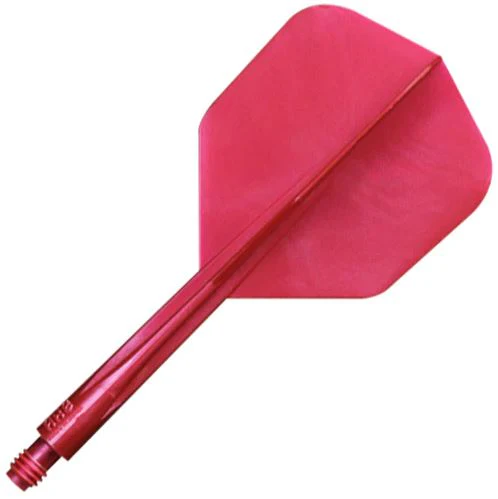
Dart Flights
The flight is the drag mechanism. It controls how much the tail lifts during flight and therefore the arc of the dart. More drag produces a higher arc and more stable flight — standard-size flights are the most forgiving and suit most players, especially those still developing throw consistency.
Slim flights reduce drag, flatten the trajectory, and suit faster throws. Kite and teardrop shapes offer intermediate drag profiles. The correct flight is the one that produces level dart entry into the board on all three darts — where the barrel arrives parallel to the ground rather than nose-high or tail-high.
Dart Shafts
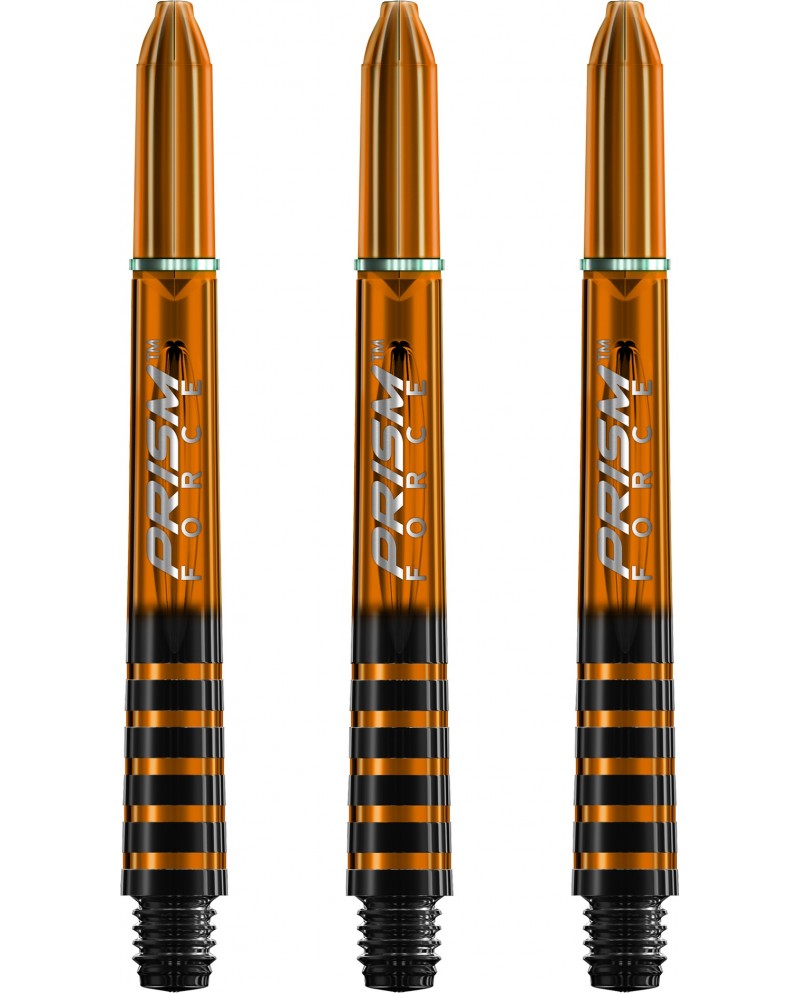
The shaft connects barrel to flight and determines the lever arm between them. Length is the primary variable — shorter shafts flatten entry angle and suit fast, direct throws. Longer shafts increase arc and tail leverage, suiting higher release points and slower deliveries. Medium shafts are the most neutral starting point for most players.
Material affects feel and durability. Nylon shafts are light and affordable but break on wire contact. Aluminium shafts are more durable but heavier and prone to bending. Carbon and composite options offer strength without significant weight addition. For practice volume, having spares of identical shafts removes any disruption to the setup mid-session.
Regulation Setup — Steel Tip
Practice at these measurements from day one. Training at incorrect distances or heights builds muscle memory that does not transfer to competition.
| Measurement | Metric | Imperial |
|---|---|---|
| Bull height | 173 cm | 5 ft 8 in |
| Floor to centre of bullseye | ||
| Throw distance | 237 cm | 7 ft 9¼ in |
| Face of board to oche front edge | ||
| Diagonal distance | 293 cm | 9 ft 7½ in |
| Oche to bullseye — use to verify both measurements | ||
| Board diameter | 45.1 cm | 17¾ in |
| Regulation playing surface | ||
| Double/treble ring width | 8 mm | 5/16 in |
| Scoring ring width for each | ||
| Bull inner (double bull) | 12.7 mm | ½ in |
| Diameter of the inner bull | ||
Equipment Discipline in the D-Artist System
The D-Artist system treats equipment decisions the same way it treats all strategic decisions — as variables to be controlled, not preferences to be indulged. The wrong weight, the wrong lighting, a board at the wrong height: each one introduces noise into the feedback loop of practice. When a dart drifts, you cannot tell whether the cause is mechanical, strategic, or environmental. Correct equipment removes the environmental layer entirely.
The full framework for equipment discipline, setup protocol, and the role of equipment consistency in competitive performance is covered in the D-Artist book:
From Equipment to Strategy
Once the setup is correct, the gains come from the system — scoring structure, checkout routing, miss geometry, and pressure management. The 501 darts strategy framework covers how all of these connect.
- 501 Strategy — scoring structure, the 350 threshold, and double selection
- Miss Geometry — how to choose targets based on where misses land
- Practice Trainer — the full D-Artist practice system with drills and periodization
- Checkout Chart — every finish from 170 to 2
- Strategy Hub — all guides in one place
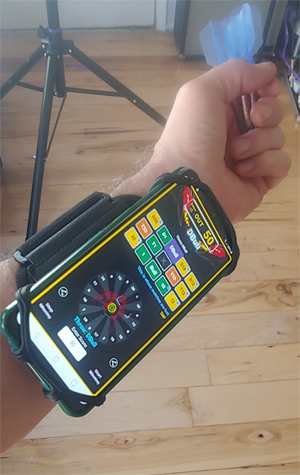
D-Artist Tool Wrist Lock System for Match Play - 100% Legal for Tournament Play
The Wrist Lock System secures your smartphone to your non-throwing wrist, keeping the D-Artist checkout coach, score tracker, and targeting grid visible from your stance — without picking up your phone between throws. In match play, knowing your out-shot before and while on the oche is the difference between a confident finish and a hesitation that costs a leg.
A reinforced polymer lock frame grips your phone from the corners. A neoprene strap with a D-ring adjuster and hook-and-loop closure holds everything flush against the wrist — readable at a glance without rotating your arm. Score entry works directly on-wrist through the full D-Artist keypad. Compatible with smartphones. The actual D-Artist version is in developement however the link here provides a product that does the same thing and can be used on inside of wrist contrary to what is displayed on product page and aligns perfectly for the Upgraded D-Artist Checkout Tool.